Wednesday Magnolia Font for Modern Web Design
I was staring at a hero section that felt technically correct but emotionally flat. The layout had perfect spacing, the color palette was on brand, and the images were high-resolution. Yet, the headline lacked soul. It was just text. In digital product creation, we often forget that typography is the voice of the interface. I needed something that could bridge the gap between professional clarity and human warmth. That is when I pulled Wednesday Magnolia from my library of Script Amp fonts to test in a real-world scenario.
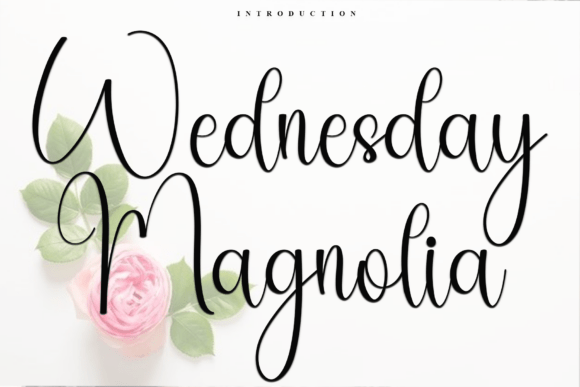
This wasn't about forcing a trendy aesthetic onto a client’s site. It was about solving a specific UX problem: how to make a boutique coaching website feel inviting without sacrificing readability or load times. Wednesday Magnolia is a beautiful and eye-catching font designed with a soft, unique touch. Its distinctive strokes give it a special character, making it meaningful and versatile for future use. As I began integrating it into the project, I realized this typeface offers more than just decorative flair; it provides a structural anchor for brand identity.
Testing Visual Hierarchy in a Live Layout
The first challenge with any script or display font is ensuring it does not overwhelm the user interface. I started by replacing the standard sans-serif header in the hero banner with Wednesday Magnolia. The difference was immediate. The soft curves and unique stroke endings created a focal point that drew the eye naturally toward the primary call-to-action. Unlike rigid geometric fonts, this typeface introduces a rhythm to the page. It slows down the scanning behavior just enough to encourage engagement, which is crucial for landing pages where trust is built in seconds.
In this specific case, the website was for a creative consultant. The goal was to convey expertise without appearing cold. Wednesday Magnolia struck that balance. It feels handwritten yet polished, avoiding the messy unpredictability of some casual script fonts. When placed over a muted image background, the font maintained its legibility while adding a layer of sophistication. This is where understanding the mood of a typeface becomes a practical design skill. It is not just about aesthetics; it is about aligning the visual tone with the user’s emotional expectation.
Readability and Responsive Considerations
A common pitfall in web design is using decorative fonts at sizes that become illegible on mobile devices. I tested Wednesday Magnolia across various breakpoints. On desktop, it shines as a headline element, commanding attention with its distinctive character. However, on smaller screens, I had to be strategic. I avoided using it for body copy or long paragraphs, which is a general rule for any script or display font. Instead, I reserved it for H1 and H2 tags, short pull quotes, and section dividers.
For mobile layouts, I increased the line height slightly to prevent the unique strokes from touching adjacent lines, which can cause visual clutter. I also ensured sufficient contrast against the background. Whether on a light cream backdrop or a dark charcoal footer, Wednesday Magnolia retained its clarity. This adaptability makes it a reliable choice for responsive web design. It proves that a premium font can be both artistic and functional if used with intention. The key is respecting its limits. It is a spotlight performer, not the entire cast.
Strategic Font Pairing for Digital Brands
No font exists in isolation. The success of Wednesday Magnolia in this project depended heavily on what I paired it with. Since the font has a soft, organic feel, pairing it with another serif would have made the design feel too traditional or heavy. Instead, I chose a clean, neutral sans-serif font for the body copy and navigation elements. This contrast created a modern typography system that feels editorial yet accessible.
The sans-serif handles the heavy lifting of information delivery, ensuring that users can scan content quickly. Meanwhile, Wednesday Magnolia adds personality to key moments, such as the logo lockup, testimonial headers, and button labels. This combination supports a cohesive brand identity. It tells the user that the brand is professional enough to care about details but approachable enough to connect on a human level. For UI designers, this pairing strategy reduces cognitive load. The user knows exactly where to look for information and where to feel inspired.
Versatility Across Digital Touchpoints
Once the website foundation was set, I extended the use of Wednesday Magnolia to other digital assets. Consistency is vital for brand trust. I used the same typeface for social media graphics, email newsletter headers, and digital ad creatives. Because the font is part of the Script Amp collection, it integrates seamlessly into various design tools. This versatility saves time and ensures that the brand voice remains consistent across all channels.
For example, on the course sales page, I used Wednesday Magnolia for module titles. It broke up the text-heavy sections and made the curriculum feel more like a journey than a list. On the portfolio homepage, it served as a decorative accent for project categories, adding a touch of elegance without distracting from the work itself. Even in small doses, such as a signature at the bottom of an email or a subtle watermark on images, the font reinforces brand recognition. It becomes a visual shorthand for the brand’s values.
Licensing and Technical Implementation
Before finalizing any design, I always check the technical specifications. Wednesday Magnolia comes with the necessary webfont files, ensuring fast loading times and crisp rendering on all browsers. I verified the commercial font licensing to ensure it covered both the website and the client’s marketing materials. This step is often overlooked but is critical for professional practice. Using unlicensed fonts can lead to legal issues and broken experiences if the font fails to load properly.
I also checked for multilingual support and alternate glyphs. While this project was in English, having access to alternates allows for greater customization in logo design or custom graphics. It gives designers the flexibility to tweak the letterforms for a perfect fit in tight spaces. Knowing that the font is optimized for digital use gives me confidence in recommending it to clients who need a scalable solution for their growing online presence.
In the end, the project succeeded not because of one single element, but because every choice supported the user experience. Wednesday Magnolia was the catalyst that transformed a generic layout into a memorable brand experience. It reminded me that in web design, typography is not just about reading; it is about feeling. When you choose a font like this, you are choosing the tone of the conversation between the brand and the user. And in a crowded digital landscape, that tone can make all the difference.