Sweet Cakeroll Font: A Designer’s Review
I was staring at a blank brand board for a local artisanal bakery last Tuesday, trying to crack the code on their visual identity. The client wanted something that felt handmade but not messy, elegant but not stiff. I scrolled through my library of script fonts, dismissing the ones that looked too rigid or overly decorative. Then I pulled up Sweet Cakeroll. As soon as I typed out the bakery’s name, the mood shifted. It wasn’t just text; it had rhythm. This premium font from Script Amp immediately stood out because it balances a calligraphic style with a warm, organic aesthetic that is rare to find in digital typefaces.
The Visual Personality of Sweet Cakeroll
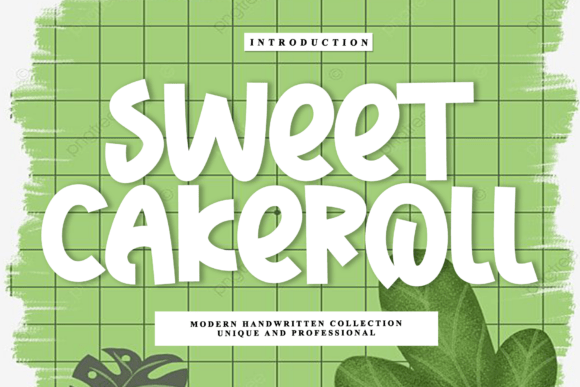
What makes Sweet Cakeroll distinct is its defining characteristic: the use of sweeping, looping ascenders that create a sense of movement and fluidity. When you look at it closely, you can see the influence of traditional brush lettering, yet it maintains the consistency required for professional brand identity work. It feels sophisticated, like a handwritten note from a friend who has excellent taste. The strokes vary in thickness naturally, giving it an authentic hand-drawn vibe without the unpredictability that often plagues lesser handwritten fonts.
In my testing, I found that this typeface exudes warmth. It is not cold or corporate. Instead, it invites the viewer in. This makes it an excellent choice for businesses that rely on personal connection, such as boutique shops, creative studios, or lifestyle brands. The organic flow of the letters suggests care and attention to detail, which is exactly what you want your audience to feel when they first encounter your logo or packaging.
Performance in Real Branding Projects
I put Sweet Cakeroll through its paces across several touchpoints for the bakery project. First, I tested it as a logo design element. Because of its looping ascenders, it works beautifully as a standalone logotype. The loops add vertical interest, allowing the logo to breathe even when placed in a compact square format for social media avatars. However, I noticed that tight kerning could cause the loops to collide with adjacent letters, so I had to adjust the tracking slightly to maintain clarity.
Next, I applied it to packaging design mockups. On a matte paper label for cookie jars, the font looked stunning. The contrast between the dark ink and the textured background highlighted the subtle variations in stroke width. It felt premium and tactile. For social media graphics, I used it for short headlines and quotes. It performed well here because it grabs attention quickly. However, I avoided using it for long captions, as the intricate details can become hard to read at smaller sizes on mobile screens.
I also experimented with it on business cards and website headers. On the web, it served as a striking display font for the hero section. Paired with a clean, minimal layout, it acted as the focal point, drawing the eye immediately to the brand name. On printed business cards, it added a touch of elegance that made the card feel like a keepsake rather than just contact information.
Readability and Practical Limitations
While Sweet Cakeroll is visually captivating, it is not a utility player. It is strictly a decorative font meant for short phrases, titles, and accents. I would never recommend using it for body text in editorial design or long-form web content. The looping ascenders and connected letterforms reduce legibility when scaled down or used in dense paragraphs. If you are designing a menu with detailed descriptions or a brochure with extensive copy, keep this font for the headers only.
Additionally, this font may not be suitable for highly formal or corporate environments. Its playful, organic nature might clash with the serious tone required for legal firms, financial institutions, or tech startups aiming for a sterile, futuristic look. It thrives in contexts where personality, creativity, and warmth are valued over strict neutrality.
Pairing Advice for Modern Typography Systems
To get the most out of Sweet Cakeroll, pairing it correctly is crucial. Since it is a complex script, it needs a stable partner. I found great success pairing it with a geometric sans serif font. The clean lines of the sans serif provide a modern counterpoint to the flowing curves of the script, creating a balanced modern typography system. For example, using a bold sans serif for subheadings and Sweet Cakeroll for the main title creates a clear visual hierarchy.
You can also pair it with a classic serif font if you want to lean into a more traditional or literary aesthetic. This combination works well for wedding invitations, book covers, or high-end product labels. Avoid pairing it with other script or handwritten fonts, as this will create visual clutter and compete for attention. Let Sweet Cakeroll be the star of the show.
Testing Before Finalizing
Before committing to this font for client work, always test it in various contexts. Check how the loops interact with specific letter combinations in your brand name. Some words may require manual adjustment of ligatures or alternates to ensure smooth connections. Review the included styles and file formats to ensure they meet your technical needs, especially if you are working on web design projects that require webfont compatibility.
Also, always verify the commercial font licensing terms. Whether you are using it for print-on-demand products, merchandise, or digital templates, ensuring you have the right license is critical to avoiding legal issues. Script Amp typically provides clear licensing options, but it is wise to double-check based on your specific usage case.
In conclusion, Sweet Cakeroll is a versatile and charming addition to any designer’s toolkit. It brings a human touch to digital and print media, making it ideal for brands that want to stand out with warmth and sophistication. Just remember to use it sparingly, pair it wisely, and let its natural rhythm guide your design decisions.