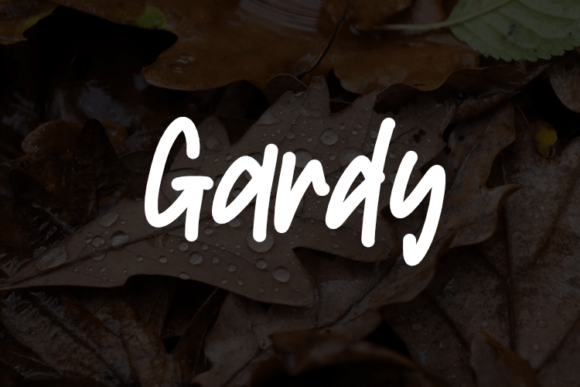
Gardy Typeface: A Modern Script for Editorial Design
The cursor blinked on my screen, hovering over a blank canvas that was supposed to become the cover of a new lifestyle guide. I had spent the better part of the morning arranging photos of sunlit kitchens and handwritten recipe cards, but the typography felt off. The standard sans serifs were too cold, and the heavy slab serifs felt too aggressive for the gentle, inviting tone we wanted to convey. I needed something that breathed. I needed a font that felt like a conversation rather than a lecture. That is when I opened the folder containing Gardy.
As a designer who has tested countless typefaces for blog headers, ebook covers, and newsletter graphics, I have learned that the right font does more than just display text. It sets the emotional temperature of the entire piece. Gardy, a modern and elegant typeface from Script Amp, arrived with a promise of flexibility and excellent readability. After spending a week integrating it into various layout projects, from digital magazine spreads to printable planners, I can confidently say it delivers on that promise with a quiet sophistication.
Finding Rhythm in Digital Spaces
What strikes you first about Gardy is its rhythm. Many script fonts or decorative display fonts struggle to maintain a consistent flow, often feeling disjointed or overly ornate. Gardy, however, moves with a natural cadence. It feels handwritten yet refined, striking that delicate balance between personal touch and professional polish. This makes it an exceptional choice for editorial design where you want to establish a strong brand identity without sacrificing clarity.
In my recent project redesigning a coaching workbook, I used Gardy for the chapter openers and pull quotes. The goal was to make the reader feel guided and supported, not overwhelmed by dense text. The .otf OpenType Font file format ensured that the characters rendered smoothly across different devices. Whether viewed on a high-resolution desktop monitor or a mobile phone during a commute, the lines remained crisp and the curves retained their elegance. This cross-platform consistency is crucial for modern content creators who distribute materials as PDFs, web pages, and social media graphics simultaneously.
Versatility Across Media Formats
One of the most compelling aspects of working with Gardy is its adaptability. It is not confined to a single use case. I tested it extensively across three distinct formats to see how it held up under different design pressures.
- Digital Newsletters: For a weekly creator newsletter, I used Gardy for the header logo and section dividers. Its legibility at smaller sizes meant it didn’t get lost in the email client’s rendering engine, while still providing a distinctive visual hook that separated our brand from the clutter of the inbox.
- Ebook Covers: When designing a recipe ebook, the title needed to pop against busy food photography. Gardy provided enough weight and character to stand out without overpowering the imagery. It felt organic, complementing the rustic aesthetic of the food styling.
- Printable Planners: In print, details matter immensely. I used Gardy for the monthly tab headers in a printable planner. The clean lines translated beautifully to paper, offering a premium feel that justified the product’s value proposition.
This versatility stems from its design philosophy. It is a modern typography solution that respects the traditions of classic lettering while embracing the needs of digital consumption. It works as a primary display font for titles and subtitles, but it is also subtle enough to be used for decorative accents in packaging design or social media graphics.
Building Visual Hierarchy with Font Pairing
A beautiful font alone does not make a great layout; it is how that font interacts with others that creates a cohesive experience. Gardy shines when paired thoughtfully. Because it has such a distinct personality, it pairs best with neutral, highly readable body fonts.
For the lifestyle blog redesign, I paired Gardy with a clean sans serif font for the navigation and body copy. This contrast allowed Gardy to take center stage as the voice of the brand, while the sans serif handled the heavy lifting of information delivery. In another instance, for a wedding guide, I paired it with a traditional serif font. The combination evoked a sense of timeless romance, with Gardy adding a contemporary twist to the classic pairing.
When selecting your font pairing, consider the mood you wish to evoke. If you are aiming for a modern, minimalist look, stick to geometric sans serifs. If you want warmth and tradition, opt for a humanist serif. The key is to let Gardy breathe. Do not crowd it with other decorative elements. Let its curves and ligatures do the work.
Technical Considerations for Creators
Before committing any typeface to a commercial project, it is essential to look under the hood. Gardy comes as an OpenType Font, which offers superior cross-platform compatibility. This is vital for designers who work across both Mac and Windows environments or who need to ensure their clients can view files correctly regardless of their operating system.
I also took time to explore the included styles and alternates. Having access to different weights or stylistic sets allows for greater creative freedom. You might find that a specific alternate character fits better in a tight logo design or that a particular ligature enhances the flow of a headline. Always check the licensing agreement before using the font in commercial products such as paid newsletters, client publications, or digital downloads. Understanding the scope of your commercial font license ensures that you remain compliant while building your brand assets.
Readability is another critical factor, especially for long-form content. While Gardy is primarily a display font, its clarity makes it suitable for short blocks of text, such as introductions or captions. However, for lengthy articles or body copy, it is best reserved for headings and emphasis. This approach maintains reader engagement without causing eye fatigue. The spacing and kerning are well-balanced, reducing the need for manual adjustments in most standard layouts.
Elevating Your Brand Identity
In the crowded landscape of digital content, your typography is a significant part of your brand identity. It signals quality, attention to detail, and aesthetic sensibility. Using a premium font like Gardy tells your audience that you care about their reading experience. It transforms a simple document into a designed object, worthy of their time and attention.
Whether you are creating a course PDF, a digital magazine, or a set of social media graphics, the choice of typeface influences how your message is received. Gardy offers a calm, enjoyable presence that invites readers in. It does not shout; it whispers with confidence. For bloggers, publishers, and independent creators looking to refine their visual language, this typeface provides a solid foundation for building a memorable and engaging brand.
As I finalized the layout for that lifestyle guide, I realized that the font had done more than just label the chapters. It had set the tone for the entire journey. The readers would not just be consuming information; they would be experiencing a curated moment of calm. That is the power of thoughtful typography. And with Gardy, that power is accessible, flexible, and beautifully executed.