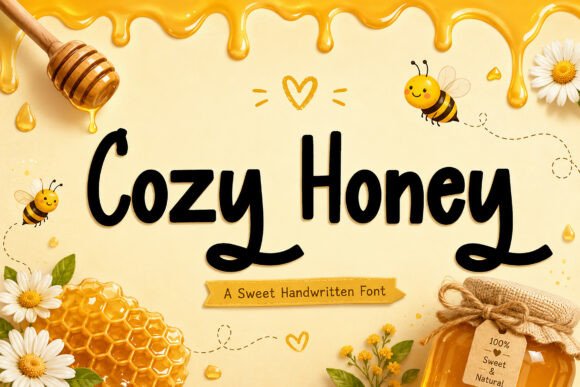
Cozy Honey Font: A Warm Typeface for Branding
I still remember the moment I opened the brief for a new local café project. The client wanted something that felt like a warm hug—inviting, sweet, and distinctly handmade. They didn’t want the sterile precision of a corporate sans serif or the rigid structure of a traditional serif font. They wanted personality. That is when I pulled up Cozy Honey, a script amp typeface that had been sitting in my library, waiting for the right moment to shine.
As a graphic designer, I am always cautious about using handwritten fonts. Too often, they sacrifice readability for style, or they look too messy to be taken seriously in a professional brand identity. But Cozy Honey is different. It strikes a delicate balance between playful charm and legible design. Inspired by honey drips, cozy mornings, and cheerful handmade lettering, this font brings an immediate sense of warmth to any layout. Here is how I integrated it into a real-world branding project, from the initial logo draft to the final packaging mockups.
First Impressions and Visual Personality
When you first load Cozy Honey into your design software, the personality jumps off the screen. It is not just a collection of letters; it feels like a series of cute doodles brought to life. The strokes are organic, with varying weights that mimic the natural pressure of a marker or brush pen. This gives the typeface a human touch that digital fonts often lack.
For the café project, I started by testing Cozy Honey as the primary logo font. I typed out the business name and immediately noticed how the ligatures connected smoothly. The flow was natural, avoiding the awkward gaps that plague many lower-quality script fonts. The "honey drip" inspiration is subtle but effective, adding a softness to the terminals of certain letters that makes the wordmark feel approachable and friendly. It is a premium font that manages to look effortless, which is exactly what modern typography aims to achieve.
Building the Brand Identity
Once the logo direction was approved, the next challenge was building a cohesive brand identity. A display font like Cozy Honey works best when it has room to breathe. I used it sparingly for headlines and key messaging, ensuring it remained the star of the show without overwhelming the viewer. For body text and detailed information, I paired it with a clean, geometric sans serif font. This contrast created a strong visual hierarchy, guiding the reader’s eye from the charming headline to the practical details.
This pairing strategy is crucial for maintaining professionalism. While Cozy Honey brings the emotion and charm, the supporting sans serif provides stability and readability. Together, they create a balanced system that works across various media. I tested this combination on business cards, where space is limited. The large, bold strokes of Cozy Honey held up well even at smaller sizes, provided I adjusted the tracking slightly to prevent the letters from touching.
Packaging Design and Product Labels
The real test for any creative font is its application on physical products. For this café, we designed labels for jars of house-made jam and bags of roasted coffee beans. Packaging design requires a font that can capture attention on a crowded shelf while remaining clear enough to read product details.
Cozy Honey excelled here. Its playful nature aligned perfectly with the artisanal vibe of the products. On the jam jars, I used the font for the flavor names, such as "Strawberry Basil" or "Spiced Apple." The rounded, friendly shapes of the letters complemented the organic shapes of the fruit illustrations we included. The font’s inherent warmth made the products feel homemade and cared for, which is a significant factor in consumer engagement for small businesses.
I also experimented with the font on tote bags and merchandise. Because Cozy Honey is a handwritten font with distinct character, it looks fantastic when printed on fabric or embossed on paper goods. It adds a tactile quality to the design, reinforcing the brand’s commitment to craftsmanship. However, I did learn that for very small print, such as ingredient lists, sticking to the supporting sans serif was necessary to ensure compliance and readability.
Digital Applications and Social Media
In today’s market, a brand identity must translate seamlessly to digital platforms. I applied Cozy Honey to the café’s website headers and social media graphics. On the homepage hero section, the font served as an inviting greeting, setting the tone before the user even scrolled down. Its cheerful demeanor encouraged visitors to explore further.
For Instagram posts and stories, Cozy Honey became a go-to for quote graphics and promotional announcements. The font’s playful style performed well in short-form text, where impact matters more than length. I found that using it for single words or short phrases created high engagement, as the visual appeal stopped users from scrolling past. It is important to note that while Cozy Honey is versatile, it is primarily a display font. Using it for long paragraphs of text on a website would strain the reader’s eyes, so I reserved it for titles, buttons, and accent elements.
Practical Advice for Designers
If you are considering adding Cozy Honey to your toolkit, here are a few practical observations from my workflow. First, always check the included styles and alternates. Many high-quality script amps offer multiple variations of letters to avoid repetition in longer words. Swapping out alternate characters can make a logo feel more custom and less like a default preset.
Second, consider the licensing. Since this is a commercial font, ensure you have the appropriate license for client work, especially if the brand plans to sell merchandise. Most reputable sources provide clear guidelines for web design, print, and product usage.
Finally, test the font in various environments. What looks great on a bright white screen might behave differently on textured paper or dark backgrounds. I recommend creating a quick mood board with Cozy Honey alongside your chosen color palette and secondary typefaces. This helps you visualize the overall brand perception before committing to final assets.
Cozy Honey is more than just a set of letters; it is a tool for storytelling. Whether you are designing for a boutique skincare brand, a local restaurant, or a creative studio, this font brings a level of intimacy and joy that resonates with audiences. It reminds us that design does not always have to be serious to be effective. Sometimes, a little sweetness is exactly what a brand needs to stand out.